

On 18 July 2024, the President assented the Public Procurement Act 28 of 2024, which was subsequently published in the Government Gazette on 23 July 2024. Drafted in response to the 2022 invalidation of previous regulations, this Act creates a unified legal standard for all organs of state and public entities, replacing the fragmented systems that preceded it. While the Act is signed, the specific regulations are currently in the drafting phase and remain open for public comment until 15 June 2026.

Figure 1 National Treasury, Republic of South Africa, 240 Madiba Street
CEO of BLSA wrote in her weekly newsletter a response to the regulation, in this newsletter she asked the question “Are our policies as a country pro-growth?” she answered the question by saying that the reader should hope it is.
In this post she highlighted her concern that a tender set out to industries with a small number of qualifying suppliers can lead to severely inflated costs stemming from the lack in competition in the supplier pool. She said that “The municipality faces either paying inflated costs or not upgrading critical infrastructure. Neither outcome serves growth or transformation.”
She went on to state that she is concerned that the cumulative effect of a tiered, mandatory and percentage-based system that is bluntly enforced among a limited supplier pool and is based on procurement efficiency and project costs. Mavuso said “There are more effective ways to drive transformation. Create incentives for established firms to develop black-owned joint venture partners. Set ambitious transformation targets but allow procurement officers flexibility in how to achieve them based on market realities. Ensure black-owned firms have access not only to domestic markets but also international markets.”
Noting that Mavuso has an open invitation to critique the regulations set out by The South African National Treasury. It stems clearly from her article that although positive initiatives are made in the 2026 Draft Procurement Regulations, she was of the opinion that “Before finalising these regulations, Treasury must conduct a proper economic impact assessment.”
A cornerstone of the new Act is its tiered approach to transformation, setting specific thresholds to empower black-owned businesses:
- Below R20 million: Tenders are set aside exclusively for 100% black-owned suppliers.
- R20 million to R100 million: Suppliers must prove they procure 40% of their inputs from 51% black-owned suppliers, or 30% from 100% black-owned suppliers.
- Above R100 million: There is a mandatory requirement for 25% subcontracting to 100% black-owned businesses.
The draft outlines several methods for public procurement, categorizing them into open competitive methods and direct methods:
- Request for Quotation (RFQ): Used for low-risk, standardized requirements below a specific value threshold where at least three quotations are typically required from the prospective supplier database.
- Request for Bid (RFB): A public invitation to bid used when specifications are clear and evaluation is primarily based on the lowest price.
- Request for Proposals (RFP): Implemented for complex projects requiring specialized expertise or innovation, where evaluation is not based solely on price.
- Competitive Dialogue: A process used for complex projects where specifications are not fully defined, allowing for iterative discussion with bidders in order to refine requirements.
- Direct Procurement: A non-competitive method which will be allowed only under specific conditions, such as when a supplier has exclusive intellectual property rights, for national security reasons, or in extreme emergencies.

Figure 3 Extract from the proposed bill by the DA
Minister of Finance Enock Godongwana has repeatedly stressed that the new rules will “curtail the misuse of public funds and corruption”. He described ethical sourcing as an “unassailable priority,” noting that non-compliance has historically compromised the integrity of the country’s financial processes
Although this has been heavily criticised by opposition parties, the DA (Democratic Alliance) describing the regulations as “exactly the wrong policy at the wrong time”. They objected saying that the strict B-BBEE ownership requirement will force the government to pay premiums toward a small pool of politically connected suppliers instead of proving to be of value to the infrastructure or purpose of tenders.
Along with their critique the DA has proposed an “Economic Inclusion for all” bill to replace the Procurement Regulations currently set out. According to them, this bill is focused on the need of a project rather than the race of the supplier.
In this proposed bill, the DA went on to structure a different all-inclusive approach towards procurement. A table from their document shows the contrast between the two:
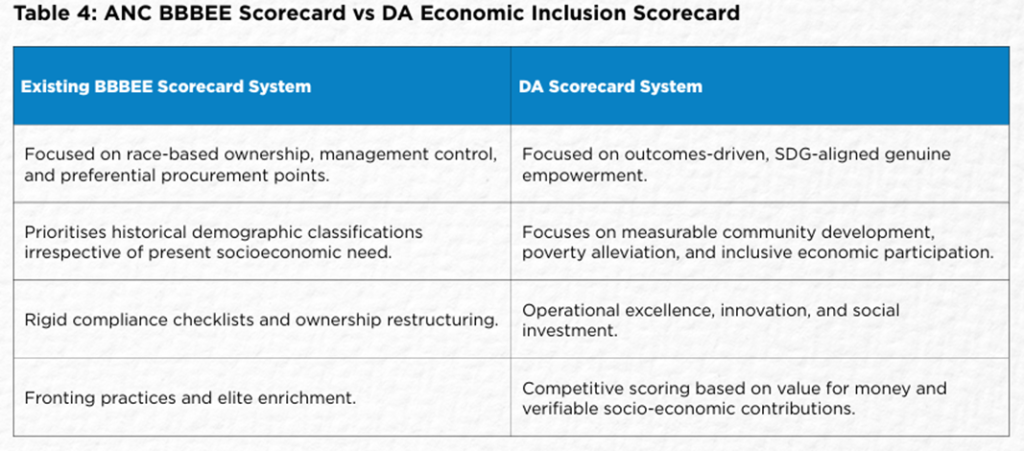
Figure 4 Extract from the proposed bill by the DA
The Minister’s primary rebuttal (most recently stated after the 2026 Budget Speech) is that BEE is not a choice, but a requirement. He has argued that:
“You cannot dismiss BEE as it is required by the Constitution. It is a constitutional imperative.”
Minister of Finance Enock Godongwana
He maintains that Section 217(2) of the Constitution specifically allows for “categories of preference” to protect persons disadvantaged by unfair discrimination.
The Competition Commission’s spokesperson Siyabulela Makunga wrote recently about a regulatory review to remove certain rules and restrictions. He pointed to international research showing that investors are sensitive to predictability and workability in regulatory systems. He cited the IMF’s view that South Africa has one of the most restrictive business environments compared to peers, with lengthy approval processes, complex licensing and uncertainty over how rules are applied.
Clearly faced with backlash and opposition from within business groups, we all await to see what The Minister of Finance will do after the commentary of the public on the procurement regulations draft.
Have an Opinion? Here’s How to Effectively Shape South Africa’s New Procurement Rules: Click here to read our step by step guide to comment on the Act
How did we get here? Click here to read the timeline overview of the Act and why the upcoming public comment periods are expected to be some of the most highly contested in South African history.